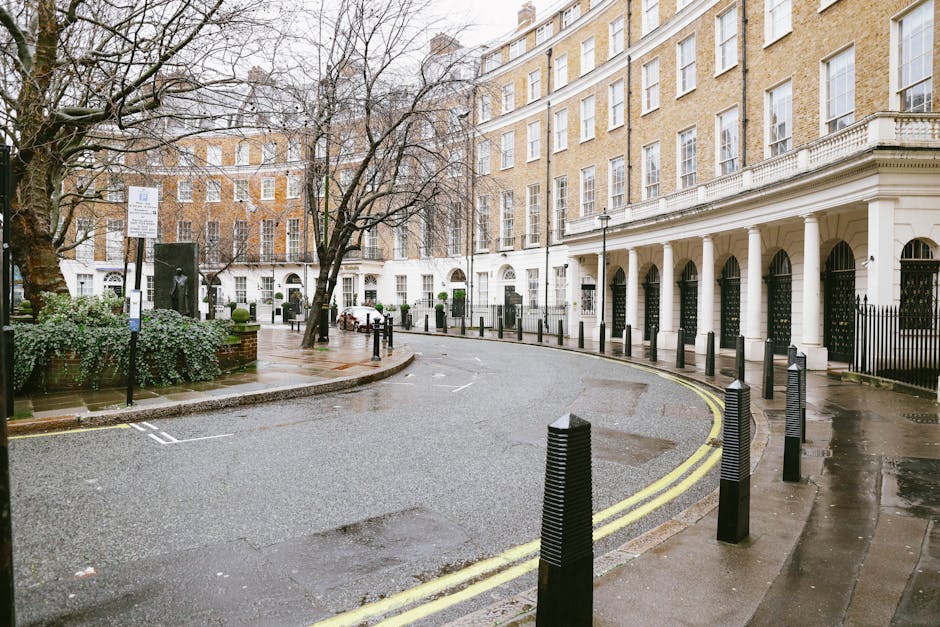
Gower Street & WC1: Bloomsbury Move Checklist
Moving in Bloomsbury is rarely a simple box-ticking exercise. Between controlled parking, compact stairwells, shared entrances, busy streets, and the need to keep neighbours onside, even a short move can become complicated fast. If you are planning a relocation around Gower Street and the wider WC1 area, a focused Bloomsbury move checklist will save time, reduce stress, and help you avoid the small mistakes that tend to cause the biggest delays.
This guide is designed for real-world moving conditions in central London. It covers what to prepare, how to organise the day, where people usually go wrong, and which practical checks matter most when access is tight. If you want a calmer move, clearer planning, and fewer surprises on the day, you are in the right place.
Practical summary: In Bloomsbury, success usually comes down to planning access, protecting fragile items, booking the right moving support, and building in a little extra time for stairs, lifts, and parking restrictions.
Table of Contents
- Why Gower Street & WC1: Bloomsbury move checklist Matters
- How Gower Street & WC1: Bloomsbury move checklist Works
- Key Benefits and Practical Advantages
- Who This Is For and When It Makes Sense
- Step-by-Step Guidance
- Expert Tips for Better Results
- Common Mistakes to Avoid
- Tools, Resources and Recommendations
- Law, Compliance, Standards, or Best Practice
- Options, Methods, or Comparison Table
- Case Study or Real-World Example
- Practical Checklist
- Conclusion
- Frequently Asked Questions
Why Gower Street & WC1: Bloomsbury move checklist Matters
Bloomsbury moves are often judged by the details that are easy to overlook. A property may look manageable on a map, yet once you factor in shared hallways, basement flats, upper floors, narrow internal stairs, and limited stopping space, the job becomes more demanding. That is especially true near Gower Street, where footfall, traffic flow, and building access can all shape the moving schedule.
A strong checklist matters because moving day is not the right time to be improvising. If you arrive without the right packing materials, without confirming lift access, or without thinking through how large items will exit the building, everything slows down. The most efficient moves usually look boring from the outside because they were carefully planned beforehand.
For people moving in and out of WC1, the checklist also acts as a coordination tool. It helps you line up cleaners, landlords, porters, building managers, tenants, and the removal team without crossing wires. If your move includes furniture, delicate items, or storage, it is worth reviewing the relevant service pages such as house removals support, flat moving help, and man and van services to understand how professional support can be matched to the scale of your move.
There is also a simple reason this matters: central London time costs money. A delay in one part of the process can cascade into parking issues, missed handover windows, or extended labour time. A checklist keeps those risks visible before they become problems.
How Gower Street & WC1: Bloomsbury move checklist Works
At its core, the checklist works by breaking the move into manageable stages: planning, packing, building access, transport, loading, delivery, and final handover. Each stage has a few non-negotiable checks. You do not need a complicated system; you need a sensible one.
Start with the property itself. Measure doorways, stair turns, lift dimensions, and any awkward hall corners. Then look at the contents of the home and separate items into categories: essentials, fragile, bulky, high-value, and items going into storage. This kind of sorting makes it easier to decide whether you need extra packing supplies, specialist lifting help, or a larger vehicle.
The checklist then moves outward to logistics. In Bloomsbury, that usually means parking arrangements, access permissions, timing windows, and the route from the property to the vehicle. A move can fail on the day because the van is too far away, the loading bay is blocked, or a lift is unavailable. Good planning keeps those frictions in view.
If you are still deciding how much support you need, it can help to compare your move against the service options on removal services, full removals, and removal van hire. The right choice usually depends on distance, volume, fragility, and access.
One useful rule: if a task would be awkward with two people, assume it will be difficult with one. That sounds obvious, but it is how many self-moves go sideways.
Key Benefits and Practical Advantages
A well-built moving checklist does more than reduce stress. It improves decision-making, protects your belongings, and helps everyone involved know what happens next. In a dense area like Bloomsbury, that clarity is a major advantage.
- Faster loading and unloading: Items are packed, labelled, and grouped in a sensible order, so the removal team can work efficiently.
- Lower risk of damage: Fragile, heavy, and awkward items are handled with the correct packing materials and lifting approach.
- Better use of time: You are less likely to discover last-minute problems such as missing keys, blocked access, or forgotten paperwork.
- Clearer costs: When the job is planned properly, quotes are more accurate and the move is less likely to overrun.
- Less disruption to neighbours and building users: This matters in shared buildings, managed blocks, and busy street settings.
There is also a less obvious benefit: a checklist gives you emotional breathing space. When the day is structured, you are not carrying every decision in your head at once. That matters more than people think. A move is tiring enough without running an internal office in your own brain.
For larger furniture pieces, it is worth checking guidance on furniture removals and, where relevant, specialist help for piano moving. Those services are not just about strength; they are about the correct method, protection, and route planning.
Who This Is For and When It Makes Sense
This checklist is useful for several types of movers. It is not only for big family homes or complex relocations. In Bloomsbury, even compact moves benefit from proper planning because the local environment creates its own constraints.
Homeowners and tenants in WC1
If you are leaving a flat, townhouse, studio, or shared property, this checklist helps you stay organised from notice period to final clean. It is especially helpful where there is a deposit to protect and a tight handover deadline.
Students and younger renters
Bloomsbury has a strong student population and a lot of short-cycle moving. If you are moving between term-time accommodation, or heading into a first independent flat, the essentials are different from a full household move. Focus on bedding, books, electronics, kitchen basics, and safe transport for laptops and monitors. For smaller jobs, student removals can be a sensible fit.
Office and academic moves
WC1 often involves offices, research spaces, and mixed-use premises. These moves demand careful scheduling, labelled equipment, and attention to data-sensitive or fragile items. If your move includes desks, files, or IT equipment, look at office removals and plan in stages rather than treating everything as a single rush.
Anyone with limited access or heavy items
If the route includes stairs, tight corners, or bulky furniture, you will benefit from structured planning and maybe a more hands-on moving service. The same is true if you are working alone for part of the move and need a realistic plan for heavier lifting.
Step-by-Step Guidance
The most reliable way to approach a Bloomsbury move is to work backwards from moving day. Start with the destination date, then build each week around what must happen before then.
- Confirm the move date and access window. Check key collection, landlord handover, parking constraints, lift availability, and any building instructions.
- Sort your belongings early. Decide what is staying, what is being donated, what is going into storage, and what must be moved first.
- Reduce volume before you pack. Decluttering now saves packing time later. If you want a structured approach, the guide to pre-move decluttering is a practical starting point.
- Gather materials. Boxes, tape, wrapping paper, mattress covers, labels, marker pens, wardrobe boxes, and floor protection all help. The packing supply page at packing and boxes is useful for planning quantities.
- Pack by priority, not by room alone. Mix the room approach with an "open first" system. Keep documents, chargers, toiletries, a kettle, and a change of clothes separate.
- Prepare awkward items early. Pianos, sofas, beds, wardrobes, and freezers need special handling. See the advice on moving beds and mattresses and the risks of DIY piano transport.
- Label clearly. Mark boxes with contents, room, and priority level. A box labelled "books" is fine; a box labelled "living room books, heavy, unpack last" is better.
- Protect floors and walls. In older Bloomsbury buildings, scuffs happen quickly. Doorframe covers and floor runners are worth the effort.
- Confirm the route to the vehicle. Check the shortest practical route from property to van and identify any pinch points.
- Do a final walk-through. Look in cupboards, on shelves, behind doors, in loft spaces, and under beds. It is astonishing how often one charger, one file, or one set of keys is left behind.
- Hand over and document. Photograph the condition of the property if needed, return keys properly, and keep a record of final meter readings or agreed checkpoints.
If you are moving a full home, the broader guide to moving house with less stress offers a useful companion approach. For people who need a fast turnaround, same-day removals may be relevant, but that only works well when the access and packing are already under control.
Expert Tips for Better Results
Good moving advice is usually simple, but the best advice is specific. Here are the details that make a real difference in WC1.
Use "load order" labels
Mark the boxes and items that should be loaded last and unloaded first. That reduces the risk of essential items getting trapped behind furniture you will not need until later.
Pack for the building, not just the item
A box may be sturdy enough in isolation, but not ideal if it must be carried down three flights of stairs. Keep weight sensible. Heavy boxes are a common source of back strain and dropped contents.
Protect corners and glass
Wrap mirrors, table tops, picture frames, and shelving with extra padding. In narrow hallways, the corner of a single frame can do surprising damage to paintwork.
Think about where items will go after arrival
When a move lands in a compact flat, there is usually very little room to "temporarily" place everything. Decide in advance which room each category goes to, and keep the route clear.
Do not underestimate lifting technique
Simple body mechanics matter. Bend your knees, keep loads close, avoid twisting under pressure, and do not try to brute-force awkward objects. For a grounded refresher, kinetic lifting basics is a useful read.
Build in a buffer
In central London, a 20-minute task can become 40 minutes if parking, lifts, or traffic do not behave. Buffer time is not pessimism. It is realistic planning.
If you are storing part of the move, it may also help to look at storage options and the practical advice on protecting furniture in storage. A move is much easier when you are not forcing every single item into the new property on day one.
Common Mistakes to Avoid
Most moving problems are preventable. The trouble is that people tend to discover them too late. Here are the errors that show up again and again.
- Leaving access checks until the morning of the move. That is how parking issues and blocked entrances become expensive delays.
- Using the wrong boxes for heavy items. Overfilled boxes fail. Usually at the worst moment.
- Ignoring the stair route. A sofa that fits through the front door may still fail at the landing.
- Not separating essentials. If your first-night kit is buried under a stack of kitchen boxes, the first evening feels chaotic.
- Assuming every item can be moved by one person. Some pieces need more than goodwill and determination.
- Forgetting to confirm what the mover is taking. Ambiguity causes last-minute disagreement, especially with shared flats or partial moves.
- Skipping a proper clean. End-of-tenancy cleaning is not a formality in many cases; it is part of leaving the property in acceptable condition. The article on cleaning before moving out covers the basics well.
In our experience, the most avoidable mistake is overconfidence. The route looks simple, so people assume the whole move will be simple. Then the lift is too small, the hallway is awkward, and the booking was made without enough time. Sound familiar?
Tools, Resources and Recommendations
Good tools do not make a move glamorous, but they do make it smoother. For Bloomsbury properties, keep the kit practical and compact.
- Double-walled boxes for books, kitchenware, and fragile household items.
- Strong tape and dispenser so boxes are sealed properly and not half-open by the second trip.
- Marker pens and labels for room names, priorities, and special handling notes.
- Furniture blankets and stretch wrap for protecting upholstery, cabinets, and tables.
- Mattress covers to keep bedding clean in transit.
- Door protectors and floor covers for tight or freshly painted spaces.
- Trolley or sack barrow where access allows, especially for boxed items.
- Inventory list for tracking boxes, valuables, and electronics.
For people who want to reduce moving risk, the service overview at services overview is a good starting point. If you want a more direct move-to-booking route, the most useful next steps are usually pricing and quotes and then contacting the team with your access details and inventory.
If you are choosing a provider, look for clear communication, transparent pricing, and practical knowledge of local moving conditions. That matters more than polished sales language. A good mover should be able to discuss access, timing, packing, and handling without hesitation.
Law, Compliance, Standards, or Best Practice
Moving home is not usually a heavily regulated activity for the customer, but there are still sensible standards to follow. In central London, the most relevant issues are access permissions, safety, property condition, and the handling of goods and vehicles in a shared environment.
Best practice typically includes:
- Checking building rules for lift use, loading times, porter access, and any insurance requirements from the landlord or managing agent.
- Observing parking and loading restrictions so the move does not create avoidable disruption or penalties.
- Using safe lifting techniques and suitable equipment for heavy or awkward items.
- Keeping pathways clear to reduce trip hazards in hallways and communal areas.
- Confirming the mover's insurance arrangements before valuable items are transported.
If you need reassurance on the practical side of risk management, the pages on insurance and safety and health and safety policy are useful for understanding the standards a professional service should follow. It is also sensible to review terms and conditions and payment and security before confirming a booking.
For sustainability-minded moves, check recycling and sustainability. Reuse, donation, and responsible disposal are all worth building into the plan before move day, not after it.
Options, Methods, or Comparison Table
Different moves call for different levels of support. The right method depends on volume, access, timing, and how much lifting you want to do yourself.
| Method | Best for | Strengths | Trade-offs |
|---|---|---|---|
| DIY move | Very small loads, short distances, minimal furniture | Flexible, lower direct spend, full control | More physical effort, more risk, harder with stairs or tight access |
| Man and van | Studio flats, partial moves, modest furniture loads | Flexible, efficient, suitable for compact London jobs | May require your own packing and preparation |
| Full removals service | Whole-house moves, larger furniture, time-sensitive relocations | More support, better handling of bulky items, less stress | Usually a bigger investment than DIY or simple transport |
| Storage plus move | Staged relocations, downsizing, renovation gaps | Creates breathing room, helps if dates do not line up | Requires extra planning and organisation |
For many Bloomsbury movers, the middle ground works best: a professional transport service with strong packing preparation on your side. If you are comparing those options, it helps to review man with a van support, removal company support, and the local removals service pages to see which level of help matches your move.
Case Study or Real-World Example
Consider a common Bloomsbury scenario: a two-bedroom flat off Gower Street, with a second-floor walk-up, a mix of boxed household goods, one sofa, a bed frame, a mattress, shelving, and several fragile items including lamps and framed prints. Nothing huge on its own. Together, though, it adds up.
The move goes smoothly only after three things are done early. First, the resident clears out unnecessary items and reduces the box count. Second, the large furniture is measured against the stairwell and doorway in advance. Third, the packing is grouped by priority so the essentials are accessible immediately after arrival.
Because the route to the van is narrow and there is limited curbside space, the team needs accurate timing. That means no improvisation, no guessing about parking, and no "we will just see on the day" approach. The result is a faster load, less carrying back and forth, and fewer chances for scratches or delay.
This is exactly why a checklist matters. It turns a move from a series of assumptions into a sequence of sensible actions. And in a place like WC1, that difference is huge.
Practical Checklist
Use this checklist as your final pre-move control sheet. If you can tick off most of these items before the van arrives, you are in good shape.
- Confirm move date, arrival time, and key handover arrangements.
- Check parking, loading, and building access permissions.
- Measure stairs, lifts, doors, and awkward turns.
- Declutter and remove items you no longer need.
- Book packing supplies and gather protective materials.
- Pack essentials separately for the first 24 hours.
- Label boxes by room, priority, and fragile contents.
- Prepare furniture for dismantling where needed.
- Arrange specialist help for piano, sofa, bed, or heavy items if relevant.
- Protect floors, banisters, and doorframes in the property.
- Keep valuables, documents, and keys with you.
- Take meter readings and photos if needed.
- Do a full final sweep of cupboards, shelves, drawers, and storage spaces.
- Confirm the route from property to vehicle is clear.
- Plan the order in which items will be unloaded at the destination.
- Set aside cleaning materials for the final property check.
- Save contact details for the mover and building representative.
Expert reminder: The best moving day is not the one that feels rushed but the one that feels ordinary. Calm, organised, and slightly uneventful is exactly what you want.
Conclusion
A Bloomsbury move near Gower Street and across WC1 asks for more planning than many people expect. The streets are busy, the properties are often compact, and access can be the real deciding factor. A good checklist gives you structure, reduces avoidable stress, and helps you make smarter choices about packing, transport, and support.
Whether you are moving a small flat, a student room, a family home, or part of an office relocation, the same principle applies: prepare the property, prepare the route, and prepare the load. Do that properly and the rest becomes much more manageable.
If you want help turning your moving plan into a straightforward booking, review the service options, check the guidance on pricing, and make sure the mover understands your access requirements before the day arrives. A little clarity now saves a lot of scrambling later.
Get a free quote today and see how much you can save.
Frequently Asked Questions
What should be on a Bloomsbury move checklist for Gower Street and WC1?
At minimum, it should cover access, parking, packing supplies, furniture preparation, box labelling, cleaning, and final handover tasks. In Bloomsbury, route planning and stair access are especially important.
How far in advance should I start preparing for a move in WC1?
Ideally, begin planning several weeks ahead. That gives you time to declutter, confirm building rules, book movers, and pack without last-minute pressure. Smaller moves may need less time, but early preparation always helps.
Do I need a professional mover for a flat near Gower Street?
Not always, but many people find it worthwhile because central London access can be tricky. A professional service is especially useful if you have stairs, bulky furniture, or limited time on moving day.
What is the best way to pack for a Bloomsbury move?
Pack by a mix of room and priority. Keep essentials separate, label boxes clearly, and avoid making boxes too heavy. Fragile items should be wrapped individually and boxed with enough cushioning.
How do I handle parking issues during a move in Bloomsbury?
Check restrictions early, confirm the best loading point, and make sure the mover knows where the van can stop. In central areas, parking uncertainty is one of the biggest causes of delay.
Should I book storage if my move dates do not line up?
Yes, if there is a gap between leaving one property and entering the next, storage can reduce pressure and prevent rushed decisions. It is also useful during renovations or downsizing.
What items usually need specialist handling?
Pianos, large wardrobes, sofas, glass furniture, and some mattresses or bed frames can need additional care. Heavy or awkward items may require extra equipment or more than one person to move safely.
How can I make a small flat move easier?
Declutter first, keep only what you genuinely need, and use compact, well-labelled boxes. Small flats often move faster when every item has already been sorted and packed logically.
Is same-day moving realistic in Bloomsbury?
It can be, but only for well-prepared, smaller moves with clear access. If you need same-day removals support, it is best to be very clear about inventory and access before booking.
What should I check before booking removals?
Look at insurance, pricing clarity, timing, service scope, and whether the company has experience with properties similar to yours. It also helps to review payment terms and any conditions related to access or cancellations.
What if I am moving a piano or other very heavy item?
Do not treat it like a standard piece of furniture. Special handling, proper equipment, and careful route planning are usually essential. For a safe approach, see the guidance on specialist piano moving before deciding how to proceed.
Why does a move in Bloomsbury need more planning than in other areas?
Because access is often tighter, streets are busier, and properties are more likely to involve stairs, lifts, or shared entrances. Those factors do not make the move impossible; they just make preparation more valuable.